The second edition of the PJMT NGEC in 2026 brought together bright young innovators to design sustainable, future-ready solutions. This archive captures the journey, key milestones, and lasting impact of the competition’s second chapter.
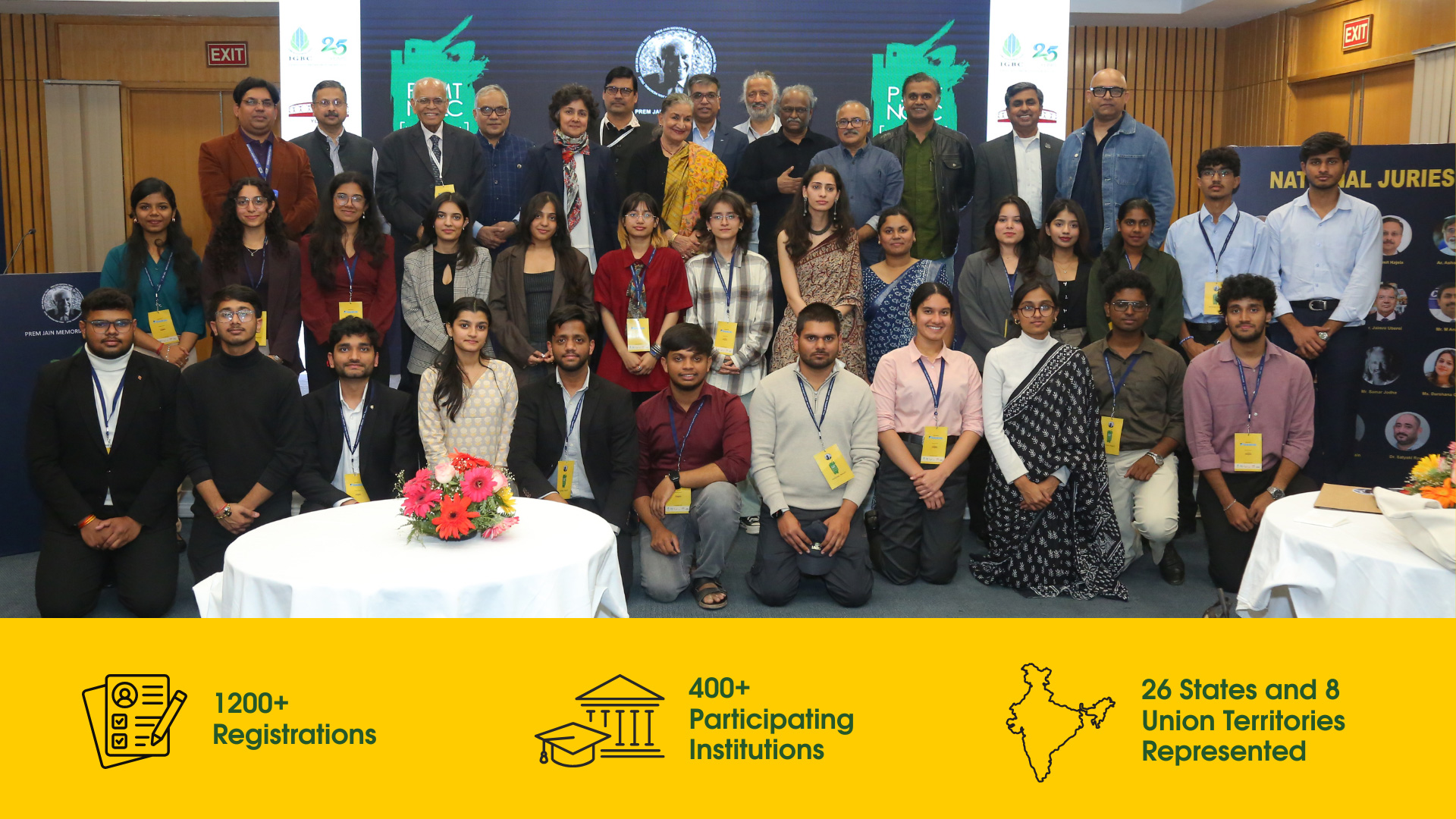
Hear from our esteemed jury panel as they share their reflections on the creativity, vision, and impact of the 2026 edition’s winning projects.
V Suresh is the Vice Chairman of the National Building Code of India and currently chairs the CII Indian Green Building Council.
Sonal Kalra is the Chief Managing Editor, Entertainment & Lifestyle, Hindustan Times.
Samar Jodha is a photographer and installation artist.
Rita Menon is the Chairperson and Managing Director of India Trade Promotion Organisation (ITPO).
Muralidhar Reddy is an Architect, Industrial Designer, and Founding Partner at Design Circle and Thinking Hands.
Manish Arora is a Professor in the Department of Applied Arts, Faculty of Visual Arts at Banaras Hindu University.
M Anand is a Green Building Professional and Principal Counsellor at the Indian Green Building Council (IGBC).
Amit Hajale is an architect, urban designer, academic, and educator.
Hariharan Chandra is a founder trustee at AltTech Foundation (2003), INHAF (2014) and Prem Jain Memorial Trust (2018).
Darshana Gajare is the Head of Sustainability at Reliance Brands.
Ashok B Lal is a Delhi-based architect and educator.
Anupam Jain is a founding faculty member of NIFT and Visiting Faculty at the National Institute of Design, Ahmedabad.
The second edition of the National Green Earth Challenge in 2026 highlighted innovative projects that stood out for championing sustainability, impact and creativity under the categories of Sustainable Habitat and Sustainable Product Design.
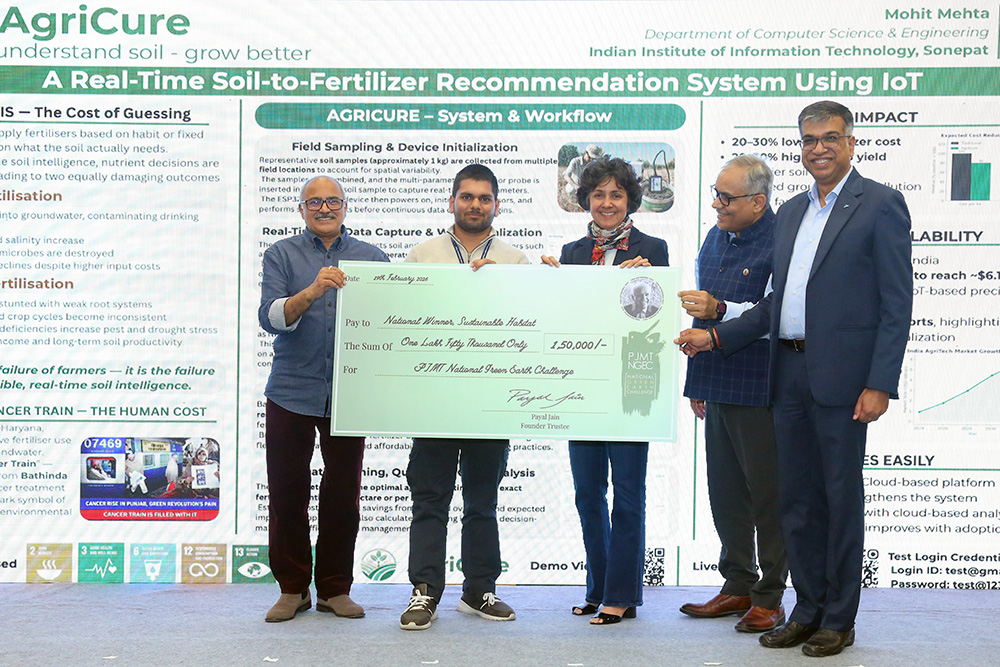
This project introduces a precision agriculture system that combines IoT sensors, satellite data, and machine learning to provide real-time, crop-specific fertilizer recommendations. By monitoring soil nutrients, moisture, pH, temperature, humidity, and crop type, the system analyzes field conditions against ideal agronomic models to reduce fertilizer overuse and nutrient loss.
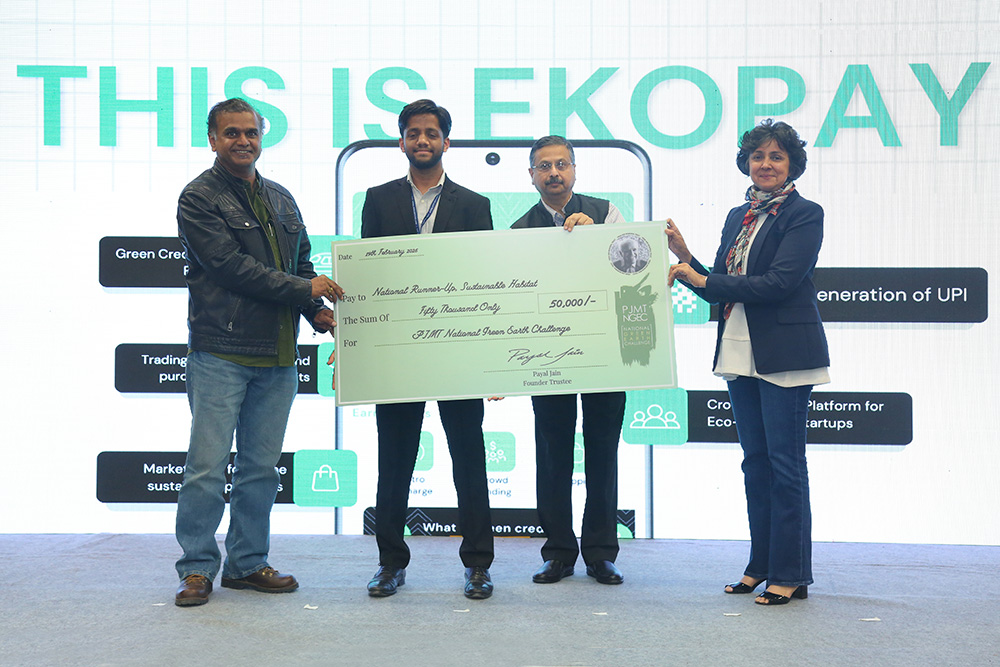
EKOPAY is a digital platform that bridges everyday consumer behavior with the global carbon credit market by rewarding sustainable choices with tradable green credits. The system allows users to earn credits through eco-friendly purchases or actions, which can then be sold to organizations seeking to offset emissions and meet net-zero targets.
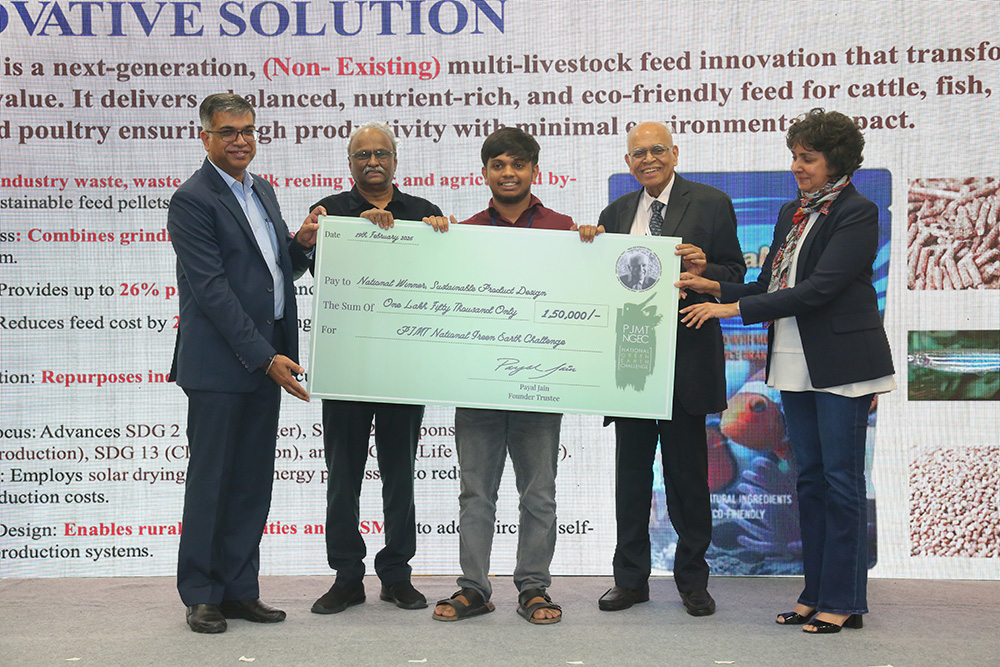
NaturaMix is a circular bioeconomy innovation that converts textile waste, silk industry by-products, and agricultural residues into nutrient-rich feed pellets for poultry, cattle, fish, and prawns. Using an integrated, solar-powered system for grinding, mixing, drying, and pelletizing, the project produces affordable, high-protein feed while significantly reducing pollution and waste.
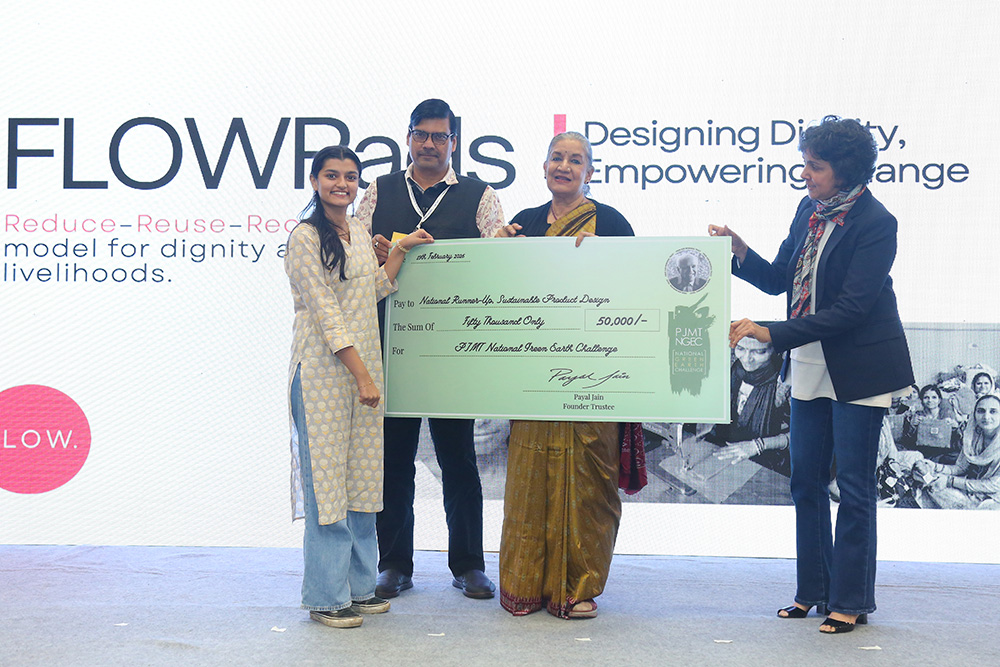
FLOWPads is a holistic menstrual health ecosystem designed to address affordability, stigma, and environmental harm in rural India. The project introduces a reusable, biodegradable menstrual pad made primarily from upcycled fashion waste and organic cotton, engineered for comfort, hygiene, and discretion. Its handkerchief-like appearance allows pads to be dried openly without social stigma, while a seven-layer construction ensures durability, leak protection, and breathability.